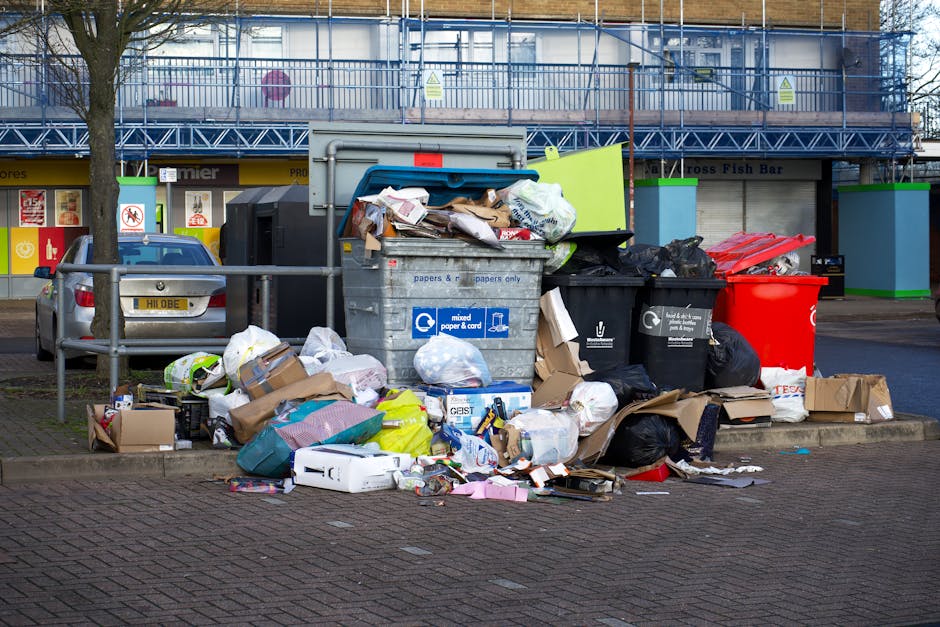
Brent Council bulky waste rules for NW6 residents: a practical, local guide
If you live in NW6 and you are staring at an old sofa, a broken wardrobe, or a mattress that has outstayed its welcome, the process can feel oddly fiddly. That is exactly why Brent Council bulky waste rules for NW6 residents matter. The rules shape what you can leave out, what needs booking, what may cost extra, and when it makes more sense to use a private clearance service instead.
This guide breaks the whole thing down in plain English. You will find how the system usually works, what items are commonly accepted or refused, where people get caught out, and how to choose the cleanest, least stressful route. No fluff. Just the stuff you actually need when the hallway is full and the lift is not helping.
Why Brent Council bulky waste rules for NW6 residents Matters
Bulky waste is not just "stuff that does not fit in the bin". In London, it often means a mix of furniture, appliances, mattresses, and awkward household items that need a separate collection route. For NW6 residents, the local reality is a bit more complicated because flats, shared entrances, narrow streets, parking pressures, and limited storage all make waste removal less straightforward than it looks on paper.
The rules matter for three simple reasons. First, they help you avoid leaving items in the wrong place and risking missed collection or a complaint from neighbours. Second, they reduce the chance of paying twice because something was not prepared properly. Third, they steer you away from fly-tipping, which can create a real mess around communal bins, alleyways, and estate entrances. Nobody wants to be that person, honestly.
There is also a practical side. A bulky waste collection through the council can be a sensible option for one or two items, but once you are clearing a room, a flat, or a probate property, the process changes fast. That is where knowing the rules early saves time and a few headaches.
Expert summary: If you are in NW6, treat bulky waste as a planning task, not a last-minute bin job. Check item type, access, collection method, and preparation before you book anything.
How Brent Council bulky waste rules for NW6 residents Works
The exact arrangement can change over time, so the safest approach is to treat Brent Council's current instructions as the final word. In practice, bulky waste collections usually involve booking in advance, specifying the items, and following the council's preparation rules so the crew can remove them safely.
Most residents discover the same basic pattern:
- You identify the items you need removed.
- You check whether they are accepted as bulky waste.
- You book a slot and follow any limits on quantity or item type.
- You leave the items in the agreed place at the agreed time.
- The collection team removes what was booked, not whatever happens to be nearby.
That last point catches people out. If you put out "just one extra chair" or a small bag of rubble beside the sofa, it may not go. Councils generally work to a defined list and a defined booking. The crew is there to collect what has been arranged, not to solve the whole room in one go.
In NW6, access can be the biggest variable. If you live in a top-floor flat, a converted house, or a building with a tight stairwell, it is worth thinking about whether the item can be moved safely to the collection point. A wardrobe that looks manageable in the bedroom can become a different beast once it is in the hallway. You know the feeling.
Common bulky items often include sofas, chairs, tables, beds, mattresses, wardrobes, and white goods. Some items may be refused because they are too hazardous, too heavy, contaminated, or outside the council's standard scope. That is normal, not personal. Councils have to balance safety, time, and waste handling rules.
Key Benefits and Practical Advantages
When the council route works, it can be a neat solution. Not glamorous. Just neat.
- Convenience: You do not need to hire a van or figure out disposal yourself.
- Lower effort: Good for residents with limited mobility or no transport.
- Clear process: A formal booking gives you a plan, which is surprisingly calming when the flat is half-packed.
- Local accountability: A council collection is built around local waste handling rules and approved disposal routes.
- Reduced risk of mistakes: If you follow the instructions properly, there is less chance of dumping waste incorrectly.
There is also a hidden benefit: it forces you to decide what is actually rubbish and what can be reused, repaired, donated, or sold. That little pause before disposal often saves space and money. Truth be told, many people book bulky waste because they are overwhelmed, then realise half the item pile could have gone another way.
If you are looking at a larger clearance, you might also compare the council option with a broader waste removal service or one of the specialist local clearance options such as furniture clearance or furniture disposal. That comparison is often where the real decision gets made.
Who This Is For and When It Makes Sense
This topic is most useful if you are an NW6 resident dealing with one of the following situations:
- moving home and clearing out unwanted furniture
- replacing a mattress, bed frame, or sofa
- emptying a rented flat before check-out
- dealing with inherited belongings after a probate event
- clearing a loft, garage, or storage area
- removing items from a shared house or HMOs where access is awkward
It also makes sense if you only have a small number of large items and you are happy to wait for a council booking. But if you have a full room, multiple heavy pieces, or mixed waste, you may find a private clearance route more practical. For example, a flat clear-out often goes beyond what a single bulky waste booking feels comfortable handling, especially if there are stairs, parking limits, or time pressure.
One of the most common real-world scenarios is a tenant leaving a sofa and mattress behind after moving out. In a quiet area, that can still be a nuisance. In a busy NW6 street, it can become noticeable very quickly. Better to deal with it early than let it sit there for days. Let's face it, a sofa on the pavement never looks as small as it did in the lounge.
Step-by-Step Guidance
If you want to use the council route cleanly, a simple process helps.
- List the items clearly. Separate furniture, appliances, and anything that could be classed as hazardous or special waste.
- Check acceptance rules. Councils often exclude certain materials or require special handling for some items.
- Measure access. Check door widths, stair turns, lift size, and whether the item can be carried out safely.
- Decide where items will be left. Some collections require items to be placed at a specific point, not inside the property.
- Book in advance. Do not leave this until the night before moving day.
- Prepare the item. Empty drawers, remove loose contents, and disconnect appliances properly where needed.
- Label anything unusual. If there is a mixed load or item that might be hard to identify, make the description obvious.
- Keep the route clear. Hallways and entrances should be free from trip hazards.
If you are not sure whether your items fit the council's bulky waste rules, that is usually the point where a private provider can be useful. A service such as home clearance or house clearance can be more suitable when you need several items removed together, especially from upstairs rooms.
For larger internal spaces, you might also consider loft clearance or garage clearance if the problem is less about one bulky item and more about a backlog of stuff that has quietly multiplied over the years. It happens. Usually in January, or after a family visit.
Expert Tips for Better Results
A few small habits make a big difference. These are the details people often skip, then regret later.
- Take photos before booking. It helps you remember exactly what needs removing.
- Group items by type. Sofas together, furniture together, appliances together. It makes checking easier.
- Leave a clear path. In shared blocks, this is often the difference between a smooth collection and a very annoying delay.
- Be honest about the volume. Understating the job can cause confusion. Overstating it can lead to wasted money.
- Choose the right route for the right job. One item? Council collection may be enough. Multiple rooms? Probably not.
Another practical tip: if you are replacing a sofa, mattress, or wardrobe, try to line up removal and delivery carefully. There is nothing quite like a delivery driver arriving while the old item is still blocking the doorway. A bit comic, but not when you are standing in the rain outside the block with a screwdriver.
If sustainability matters to you, check how the disposal route handles reuse and recycling. The company page on recycling and sustainability is worth reviewing if you want a service that thinks beyond simple collection.
Common Mistakes to Avoid
Most bulky waste problems are not dramatic. They are just a chain of small avoidable mistakes.
- Leaving items outside too early. This can create issues with neighbours, obstruction, or damage.
- Booking the wrong service type. A single-item collection is not the same as a clearance job.
- Mixing prohibited waste in with furniture. Batteries, paint, chemicals, and similar materials usually need special handling.
- Ignoring access issues. A perfectly valid collection can still fail if the crew cannot reach the item safely.
- Forgetting building rules. Leasehold buildings and managed blocks may have their own move-out requirements.
- Assuming all "large rubbish" is accepted. Not everything big is automatically bulky waste.
One small but common slip: people book a collection for "furniture" but forget that the furniture is partly dismantled, wet, damaged by pests, or mixed with other waste. That sort of detail can matter a lot. It is worth being a little over-specific here. A boring five-minute check can save a messy phone call later.
Tools, Resources and Recommendations
You do not need fancy equipment, but a few simple tools help:
- Measuring tape: useful for doorways, stair bends, and lift access.
- Phone camera: take pictures of the item and the access route.
- Marker labels: useful if several items are being removed from different rooms.
- Gloves and sturdy shoes: especially if you are moving items yourself before collection.
- Basic screwdriver or allen key: helpful for dismantling a bed frame or table.
On the service side, a sensible starting point is to compare the council route with private support pages such as pricing and quotes, furniture clearance, and the main home clearance or flat clearance services. If the job is business-related, business waste removal or office clearance may be a closer fit.
For people in NW6 who are juggling a move, renovations, or an end-of-tenancy deadline, having the right collection method is less about theory and more about sanity. A clear quote, a clear scope, and a clear time window. That is the sweet spot.
Law, Compliance, Standards, or Best Practice
Bulky waste sits inside wider waste-handling expectations in the UK, so best practice matters. Even when you are simply getting rid of a sofa, you still want the collection and disposal route to be lawful, safe, and traceable enough to feel comfortable.
For residents, the main compliance points are straightforward:
- do not leave waste where it obstructs pavements, doorways, or shared access
- do not mix bulky waste with hazardous materials unless the service explicitly allows it
- follow the booking instructions exactly
- check whether an item needs special handling before it leaves the property
- use a legitimate collection route rather than fly-tipping or informal dumping
For private operators, good practice also includes responsible disposal, safe handling, appropriate insurance, and clear terms. If you are comparing providers, it helps to look at pages like health and safety policy, insurance and safety, terms and conditions, and about us. Those pages do not replace legal checks, of course, but they do show how a provider thinks about risk and service quality.
If you are ever unsure about a specific item, it is better to pause and ask than to guess. That sounds obvious, but under pressure people guess all the time. Usually with a shrug and a bag of old cables. Not ideal.
Options, Methods, or Comparison Table
Here is a simple way to compare the main routes available to NW6 residents.
| Option | Best for | Pros | Limitations |
|---|---|---|---|
| Council bulky waste collection | One or a few large items | Straightforward, local, usually suitable for modest jobs | May have booking limits, item restrictions, or access rules |
| Private furniture or home clearance | Multiple items or full-room clear-outs | More flexible, often quicker, handles mixed loads better | Usually costs more than a basic council collection |
| Specialist item disposal | Single items needing careful handling | Good for awkward, heavy, or delicate pieces | Not always the cheapest for larger volumes |
| DIY removal | People with a van, time, and lifting help | Full control and flexibility | Parking, loading, disposal site rules, and physical effort all add up |
In a flat on a narrow NW6 road, the council collection may look attractive until you realise the item is too big for the lift and too awkward for the stairs. In that case, a service built around flat clearance or even house clearance can be the more realistic path.
Case Study or Real-World Example
Imagine a resident in NW6 clearing a one-bedroom flat after a tenancy ends. There is one sofa, a mattress, a coffee table, and a small wardrobe. The first instinct is to book a quick council bulky waste collection. That may work, but only if the items fit the accepted list, can be moved to the right place, and do not need special handling.
Now add one more detail: the wardrobe is still assembled, the mattress is bulky, and the building has a narrow staircase with a landing turn that catches bigger furniture. Suddenly the job is less about "put it out and wait" and more about access, timing, and lifting safety.
In a case like that, a resident might still start with the council rules, but then decide the better option is a more flexible clearance service. Not because the council route is wrong. Just because the job has grown beyond the simple version. That distinction is easy to miss when you are looking at the mess at 8 a.m. and thinking, how hard can this be?
The main lesson: match the route to the actual job, not the job you wish it was. That one principle saves a lot of stress.
Practical Checklist
Use this before you book or place any items out for collection.
- Have I confirmed whether the item is accepted as bulky waste?
- Is the item clean, accessible, and ready to move?
- Have I checked whether it needs dismantling or disconnection?
- Do I know exactly where it must be left?
- Have I checked for building, landlord, or estate rules?
- Is the collection route safe for the people moving it?
- Have I separated anything hazardous or unsuitable?
- Would a broader clearance service be simpler for this job?
A quick checklist sounds basic, but it saves time more often than people expect. Especially in a busy London week, where everything seems to happen at once.
Get a free quote today and see how much you can save.
Conclusion
For NW6 residents, Brent Council bulky waste rules are really about making disposal predictable. Once you know what counts as bulky waste, how the booking process works, and where the limits are, the whole thing becomes much easier to handle. The key is to choose the right route for the actual volume, item type, and access conditions in front of you.
If you only have one or two items and you are happy to follow the council's instructions, the local bulky waste route can be perfectly sensible. If the job is larger, mixed, awkward, or time-sensitive, a private clearance option may be a better fit. Either way, the best outcomes usually come from planning a little earlier than you think you need to. That is the quiet secret here.
And if the pile is still staring at you tomorrow morning, do not panic. Start with one item, one decision, one clear plan. That is often enough to get the whole thing moving.
Frequently Asked Questions
What counts as bulky waste in Brent for NW6 residents?
Bulky waste usually means large household items that do not fit in a standard wheelie bin, such as sofas, beds, wardrobes, tables, and mattresses. Exact acceptance depends on the collection route and current council rules, so it is worth checking before you book.
Do I need to book bulky waste collection in advance?
Yes, in most cases you should expect to book ahead. Councils generally work on scheduled collections, so last-minute requests are not the norm. If your move-out date is tight, book as early as you can.
Can I leave bulky items on the pavement before collection day?
Usually no, not unless the instructions specifically tell you to do so. Leaving items out early can create obstruction, attract complaints, or cause the collection to be missed. Keep items inside or in the agreed place until the correct time.
What if my item is too heavy to move on my own?
Then it is better to get help rather than risk injury. Heavy items like wardrobes, appliances, and large sofas can be awkward, especially on stairs. If access is difficult, a private clearance service may be more practical.
Will the council take my mattress and bed frame?
Often mattresses and bed frames are eligible, but the exact rules can vary. Some items may need to be dismantled or prepared in a specific way. Check acceptance details before booking so you do not end up with half the bed and a headache.
What should I do with items that are damaged, wet, or contaminated?
Do not assume they will be accepted. Damaged or contaminated items may need special handling, particularly if they have been affected by pests, mould, liquids, or other contamination. Ask before collection rather than guessing.
Is council bulky waste collection cheaper than private clearance?
For a small number of items, council collection is often the more economical route. But if you have several pieces, awkward access, or mixed waste, a private service can sometimes offer better overall value because it saves time, trips, and lifting hassle.
What if I live in a flat with no easy access?
That is a common NW6 issue. Narrow stairs, lifts, and shared entrances can make bulky waste harder to remove. If access looks difficult, mention it early when arranging collection so the right method can be chosen.
Can I include small bags of rubbish with bulky waste?
Usually not unless the collection specifically allows it. Bulky waste bookings are often limited to defined item types. Mixed loads are one of the fastest ways to create confusion, so keep the booking focused.
How do I know whether I should use a private clearance service instead?
If you have multiple items, need same-week removal, or face stairs and access problems, private clearance is often the easier choice. Pages such as furniture clearance, flat clearance, and home clearance can help you compare the practical options.
What happens if I book the wrong item type?
The crew may refuse the item, leave it behind, or only collect part of the booking. That is why item descriptions matter. Be specific about what it is, how big it is, and whether it has already been dismantled.
Where can I get a quote if I decide not to use the council route?
You can review pricing and quotes and then decide whether a more flexible clearance service fits your situation. If you need to speak to someone, contact us is the best place to start.